Ten financial tips for business owners in hard times

Financial management naturally tends to slip down the list of priorities for business owners when the economy is booming, finance is cheap and clients are plentiful. But when the tide turns, your ability to control your finances, especially your cash flow, becomes probably the most important survival tool available to the entrepreneur.

Here are ten ways for business owners to improve their finances during a downturn:

1. Consolidate your debt

It is easy for business owners to pile up debt during the good times – a credit card or two, a property bond, machines and vehicles bought with various asset-finance loans, generous lines of credit at suppliers and a ballooning bank overdraft. All of this can become crippling when the crunch comes, and one way to survive is to look for a financier that can consolidate it all into one loan with a long enough term to make the instalment affordable. You’ll probably end up paying more in interest, but at least you can survive the dip.

2. Take a panga to your expenses

The expenses in a business coming out of a boom time can always be slashed without necessarily hurting its core health, and when you think you cannot possibly cut anymore, go through them once again to find ways of doing more with less. Incentivise productivity and cost reduction among your staff, and invest in cost-saving systems such as GPS devices for your vehicles or insulation to bring down your electricity bill.

3. Monitor your debtors

The worst time for bad debt is during a downturn because you need every cent to keep afloat, yet the likelihood that your debtors might default is so much higher, because their businesses are also struggling. Focus on collections, rethink your credit policy and tighten your vetting processes before granting any more credit.

4. Relook your business plan

A business plan compiled in the fat years is of little use during a downturn. Often, survival depends on much more than tweaking the projected sales figures, but rather requires a radical rethink of your strategy. Discard the old plan and start working on a new one from scratch.

5. Negotiate with your financiers

As awkward as it is, start communicating early and frankly with your financiers about your situation. They know that nearly all of their clients are struggling. When you show them that you are one of their clients who is proactively making plans to survive, the chances are better that they will support a rescue effort, for example through a loan-repayment moratorium or even through an extension of your overdraft.

6. Manage minutely

A downturn requires intense hands-on management, with great attention to detail, simply because there is no room for the kind of errors that can slip in when you step away and manage your team with a light touch, as you can during boom times. Even if you are consistently a hands-on kind of manager, double down on it during the darkest days.

7. Negotiate with your suppliers

Even though your suppliers are very likely, just like you, to become wary of extending credit terms during hard times for fear of bad debt, there is still a chance that they might be willing to accommodate their best clients.

8. Look towards your neighbours

When work dries up and your team and machines stand idle it might be worth looking in places that you wouldn’t normally consider. The more established firms in your industry may well be over-committed and would happily pass over-flow work on to you, or they might find it convenient to outsource a certain type of smaller client to you.

9. Try support programmes

If you haven’t tried government incentive schemes and support programmes yet, now is the time. Don’t expect a flock of angels that will swoop to your rescue. Government programmes work slowly, but it might just be the thing that gets your business going again when the economy picks up one day.

10. Keep looking for business opportunities

Some of the best business opportunities arise during downturns. Competitors go bust, leaving huge gaps in the market. Consumers look for alternatives and are often more open to break their loyalty to their usual suppliers and service providers. The pressure of the downturn on your peers may open them up to the idea of a merger which can ensure the survival of both businesses, and take you to the next level even before the economy picks up again, as it always will.

How to create the best possible quotation

When a prospective client invites us to do a quotation we need to realise that this is when the tackie hits the tarmac. This is when our marketing and word-of-mouth endeavours materialise in tangible outcomes … or not. If we get this action wrong we have wasted the time, effort and money that got us to this point.

This article serves as a checklist of the elements and packaging of a quotation that will give us a fighting chance of winning a tender/job.

1. Pre-quote Analysis

  • When the prospective client makes the initial contact, it is good practice to get as much information as possible in order to understand the client’s need and also to prepare oneself to have all the “tools” available for doing an accurate quote.

2. On the day of the quote

  • Confirm the time and the address of the client.
  • Pitch up (we have to be there to be able to quote).
  • Be on time (or notify the prospective client if you are running late).
  • Be presentable (a neat/professional appearance).
  • Write down all specifications (leave nothing to chance).
  • Have client referrals and examples of previous projects available (e.g. printed referrals and pictures of other successful projects placed in a flip-file). Give this to the client to look through while you are busy gathering information for doing the quote.

3. After the specifications have been determined and before leaving the client`s premises

Confirm the delivery date of a written quote (confirm if this time frame meets the prospective client’s requirements).

4. Quote email

Present a great introduction including these elements:

  • Thank the client for the opportunity of quoting for the business.
  • Confirm the prospective client’s brief, i.e. what the client asked to be quoted on.
  • Edify (stories of satisfied clients).
  • Indicate when the service can be delivered.
  • Provide a link to your website (if you have one).

5. Quotation as email attachment

  • Detailed break-down (individual costing of parts/service elements, as well a labour cost component)
  • The validity period of the quote
  • Deposit needed to secure the job (also provide your banking information – name of bank, branch code of bank, your account name, your account number, the reference to be used)
  • Use a professional letterhead with your branding – if you have one.
  • Make sure the terms and conditions are included in the quote to be signed-off by the client when the quote is accepted.
  • Include a client satisfaction guarantee – money-back guarantee/free repairs if not 100% satisfied, or even something as simple as “We guarantee to be on time for the scheduled job and to leave your premises cleaner than we found it”.

6. Quotation reminder

Sent an SMS to the client immediately after the email with the quotation had been submitted.

Proposed wording of the SMS

Good day…  (name of client). I have e-mailed your quotation to ………… (email address) as promised. Kindly advise if you do not receive it, or have any further questions. We will contact you to follow up on the quote. I look forward to your expedient response and trust that we will be able to do business. Kind regards ……………… (your name and the name of your business)”

7. Quotation follow-up

Phone the prospective client to confirm that he or she had received the quotation, address any further questions and gauge the client’s decision to accept or decline the quote. If the quote is declined, see Point 8 for a script example to understand the main consideration for his or her decision.

8. To do after the response on the quote has been received

  • Signed quote :
    • Check if the deposit has been received (if not, address accordingly).
    • Confirm the implementation/delivery date and time with the client.
  • Quote declined
    • Phone the client to determine why you lost the business.
Here is a sample script to consider:

Good day…………… (name of client), this is …………… (your name and the name of your business).

Thank you for granting me the opportunity to quote for your business. I respect the fact that you have chosen another service provider. Would you kindly tell me what your main consideration was for choosing another service provider, so that I may address any shortcomings on my part for future application?

(Leave it open-ended – take notes)

Thank you for your feedback. I will take this knowledge on board. I trust that you will keep our information on record for future reference.

Have an excellent day. (Ring off)

9. Implementation

Always deliver more than you quoted for (e.g. deliver faster; upsize your service support; fix something else while you are there, without charging for it).

The task of your implementation is to “wow” and surprise the client – make it a memorable experience for your client.

10. After implementation

Always ask them to rate your service afterwards (compile a brief questionnaire and let one of your back office staff phone each client; record the feedback; apply what you have learnt; give recognition where deserved and reprimand and re-train when required).  Ask for referrals and introductions where positive feedback is received.

11. In closing

You can improve your success rate in turning quotes into business if you incorporate a quoting process which is both structured along the lines of this article and implemented in a professional manner.

Remember, getting the quote is important for the livelihood of the business and you.

May your business grow from strength to strength.

The key is to set realistic customer expectations and then not to just meet them, but to exceed them – preferably in unexpected and helpful ways.
Richard Branson

To support business owners with the important task of business planning, Sanlam gives you free access to the book Your Annual Business Game Plan for Success, which provides an easy and straightforward framework needed to draft a well-crafted game plan that will create the positive change and growth necessary for business success.

Go to www.sanlamgameplan.co.za to download your free copy.

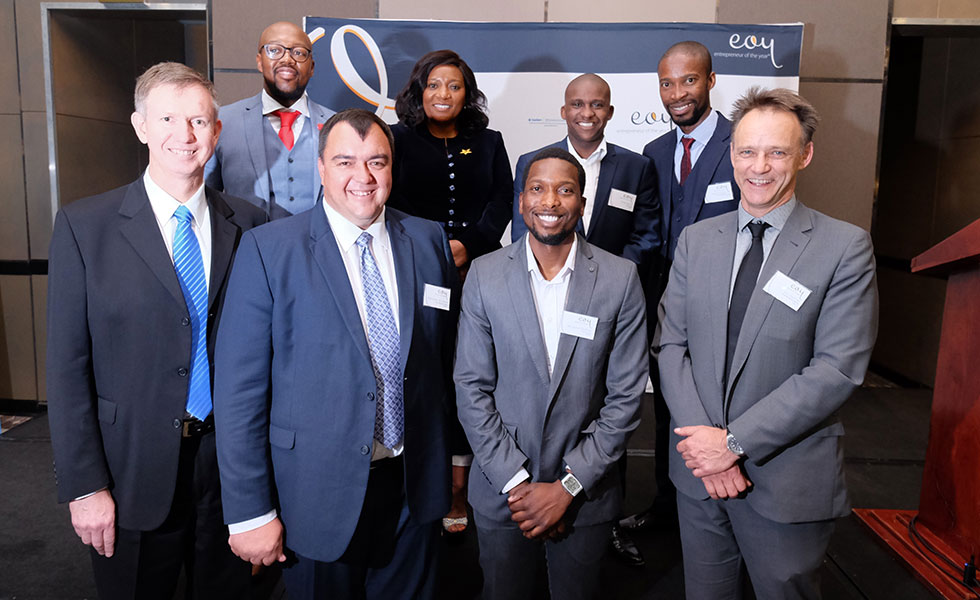
Life after being named a 2017 Entrepreneur of the Year® winner

Not only do entrepreneurial awards offer winning businesses a cash injection, but they are also a great platform to raise a business’ profile – which can often prove to be more valuable than the cash prize! An awards platform not only offers entrepreneurs the opportunity to expand their current network and receive expert analysis of their business and its process, but they also generate wide-reaching media exposure.

One month since the 2017 Entrepreneur of the Year® awards ceremony – which saw some of South Africa’s top entrepreneurs converging in one room for a morning of celebration and networking – we caught up with some of the winners to hear first-hand how the competition, and being a named a winner, has impacted their business.

Willem van der Merwe, owner of Africa Biomass Company: 2017 Entrepreneur of the Year®

“It has been a whirlwind since receiving the title of 2017 Entrepreneur of the Year® and winning has certainly elevated the public’s awareness of our company to another level. Not only have we received recognition for our work like never before, but it has also helped us to really demonstrate the value we bring to our industry.

“We have also been well-pleased with the media exposure our brand has secured since winning: the feedback we have received from clients and stakeholders, is in many ways more than double what we are accustomed to. While it is still early, we expect that the continued exposure will help us in reaching the goals we’ve set for the next level in our business. We’ll definitely consider entering again in the future!”

Read more about Willem’s business and why he was selected as the 2017 Entrepreneur of the Year® here.

Siraaj Adams and Sizwe Nzima, co-owners of Iyeza Health: 2017 Emerging Business Entrepreneur of the Year®

“We have been overjoyed since our win – both with the experience, as well as with the attention we have received post the awards ceremony. Many of our clients and stakeholders have been most impressed with the accolade and have been very complimentary – which we really value.

“We have also received fantastic media coverage and increased brand awareness – our LinkedIn profile alone has received over 2000 profile views in just one month! We will definitely enter the competition again in the near future with the goal to take our win from the Emerging Business category to the overall title of Entrepreneur of the Year®!”

Read more about Sizwe and Siraaj’s business and why they were selected as the 2017 Emerging Business Entrepreneurs of the Year®here.

Siphiwe Ncgobo, founder of iLawu Hospitality Group: Job Creator of the Year®

“Winning the Job Creator of the Year® title was both a surprise and huge honour for us. We are extremely proud of this accolade as we have always believed that the strength of our success is purely based on the dedication, commitment and sacrifices of our past and current staff members.

“We feel very fortunate to have participated in this competition which gave us the opportunity for some much needed introspection into our operations and we really valued the fair and constructive feedback from the judges.

“Without a doubt, the media exposure we have received has positively impacted our business, and we are dedicated to working even harder to make sure that our current and prospective clients’ expectations are met. We have a lot to work on in our business and have already set ourselves a few goals to achieve within the next three to five years.”

Read more about Siphiwe’s business and why he was selected as the 2017 Job Creator of the Year® here.

Considering entering the 2018 Entrepreneur of the Year® competition – watch this space for more details. Entries will open early 2018.

Balancing work-life responsibilities as an entrepreneur

Growing a business has often been equated to raising a child – a 24/7 role involving countless sleepless nights and never-ending concerns about the business’ future success. While a work-life balance is always strived for by entrepreneurs, the increasing consumer, economic and societal pressures means finding this desired balance is becoming even more difficult to achieve.

Increasingly people are working harder and longer, especially small business owners, to keep up with demands and to make ends meet – both at home and in the workplace. But while entrepreneurs may believe that more work hours, equals greater success, this isn’t always the case, and rather than this having a positive outcome and generating increased input from the extra work hours, this could have the opposite intended effect.

It is therefore not surprising that with these increased pressures and a skewed focus towards work that stress levels are on the rise. While high-stress levels are not uncommon and often unavoidable component of an entrepreneur’s day, week and month, elevated levels of stress due to increased pressures and a skewed focus towards work can lead to long-lasting negative effects, on both the entrepreneur, their family, business and broader network.

During Mental Illness Awareness Month last month, it was widely reported that increased and unmanaged levels of stress is a leading contributor to a number of mental illnesses, such as depression and anxiety. Furthermore – highlighting the consequences of an unbalanced work-life relationship – recent figures by the South African Depression and Anxiety Group (SADAG) reported that 74% of South African workers reported reduced concentration and a loss of productivity due to depression.

Business owners, therefore, need to be cognisant of the role that a healthy work-life balance can play in promoting good personal and business health.

How do our 2017 finalists and winners manage the daily struggle of balance?

Willem van der Merwe, owner of Africa Biomass Company (ABC) and 2017 Entrepreneur of the Year®:

“One of greatest challenges in running your own business is balancing the various aspects of your life, but I found that by involving my family in my business from early on helped them understand the demands and pressures placed upon me as my own boss. My family is my number one priority and having their full understanding and support is vital. No family support equals no business in my mind.

“Deciding whether family or business success is any more important than the other, and making a firm decision in this regard will you help you manage your environment accordingly and enable you to achieve your desired outcome and ultimately, your desired balance.”

Joe Hamman, owner and founder of Novus Group (Pty) Ltd and 2017 Entrepreneur of the Year® finalist.

“I don’t believe that I have perfected the balance yet myself, but I do commit to a routine of leaving the office at 6pm daily and not doing any work once I get home so that I can be 100% present with my family in the evenings. I do however wake up at 2am to catch up on any work while my family is sleeping.”

Siphiwe Ngcobo, founder of iLawu Hospitality Group and 2017 Job Creator of the Year®.

“To minimise work pressures, entrepreneurs – especially those in the start-up phase – should look to create trackable systems to monitor and track the business’ operations. When I started my business, managing a work-life balance was incredibly difficult, and it had a negative effect on my personal relationships. I’ve since learnt the benefit of implementing effective systems throughout my business which has meant that I don’t have to be physically present for each process. As a result, I now also have a team of qualified and capable staff who are able to take tasks off my hands.”