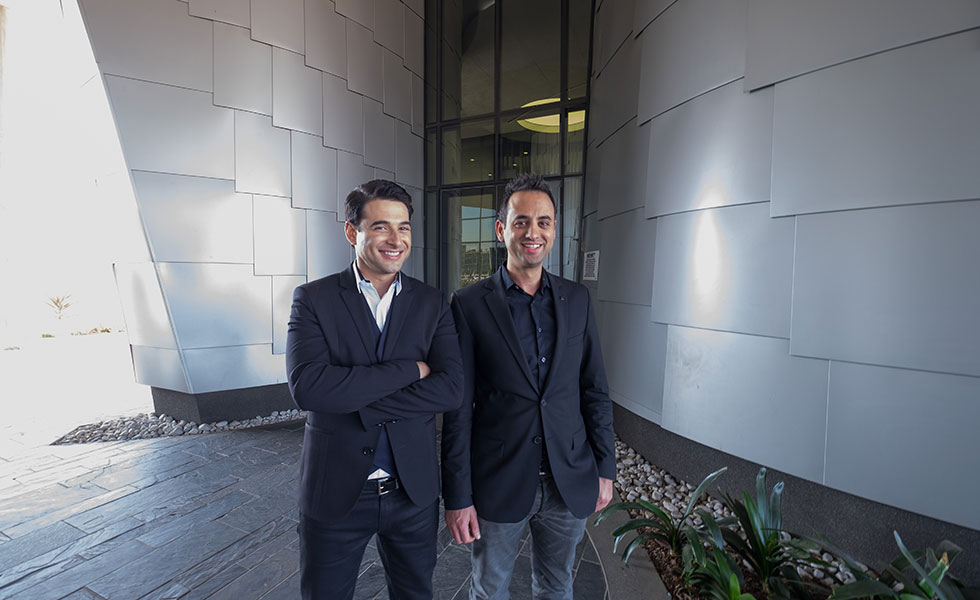
Carbon-neutral wholesale nursery collects Medium Business Entrepreneur of the Year® award

Carl Pretorius, founder of the Paarl-based business – Just Trees – walked away with the Medium Business Entrepreneur of the Year®award at the annual Entrepreneur of the Year® competition sponsored by Sanlam and BUSINESS/PARTNERS, held this morning in Johannesburg.

A wholesale tree nursery that supplies specimen container grown trees to the trade throughout South Africa, as well as to certain export markets, Just Trees is an extension of Pretorius’ values – including vision, courage, fun and compassion, for both people and the environment. Green engineering at its best, all trees are watered and fed responsibly using sustainable methods, and the business began measuring their carbon footprint in 2009, becoming a carbon neutral certified company in 2010. Pretorius and his team have also invested heavily in other green business practices that have resulted in a further reduction of the amount of water and pesticides that they use.

These environmentally friendly business practices contributed to making Pretorius stand out to the competition’s judging panel. “This is a very topical business in terms of environmental awareness – something that many other business models today are lacking. Carl has managed to effectively merge his personal values with those of his business and, as a result, has set himself up for a long-term career of fulfilment and success,” the judges said.

Committed to greening schools, hospitals and even, sometimes entire communities, the donation of trees is an important pillar of the business. Having initially committed to donating one tree for every 20 that are sold, Just Trees now donates one tree for every five trees sold and has already donated in excess of 30 000 trees over the years.

Pretorius initially purchased the farm in 1999 for recreational purposes and for growing his own olive trees, but his trees soon attracted interest from local landscape architects in the area, and from there the business was born. Since officially opening its doors in 2005, Just Trees has grown their stock to over 150 000 trees living on the 42ha farm, made up of 58 species sold in a variety of pot sizes, and is today the supplier of choice to landscape architects with repeat business making up about 75% of total orders.

Pretorius says being selected as a winner in the competition is incredibly rewarding and confirms his entrepreneurial path. “Being acknowledged for my achievements gives our business the credibility and platform to spread the message of environmentally sustainable business practices. Just Trees is proof that one can run a profitable business, while still focussing on doing things right and having a positive influence on those around them.”

He adds that recognising entrepreneurial talent through competitions such as this one is essential as it creates awareness around the role that entrepreneurs play in the economy. “It also motivates others, especially younger generations, to be part of a more environmentally friendly entrepreneurial movement, which is essential to long term growth and the success of our country.” 

For more information on Just Trees, please visit www.justtrees.co.za.

What is driving SA’s drastic decrease in entrepreneurial activity?

Entrepreneurial intentions among South Africans has dropped by almost 30% in 2015 when compared to 2013, and almost halved when compared to 2010, yet the perceived entrepreneurial opportunities has increased over the same period, according to the recently release Global Entrepreneurship Monitor South African Report 2015/16.

According to Kobus Engelbrecht, spokesperson for the Entrepreneur of the Year® competition sponsored by Sanlam and BUSINESS/PARTNERS – SA’s leading entrepreneurial platform, there are many aspects at play when analysing these figures. 

The report shows that the perceptions about entrepreneurship in South Africa has increased since 2009, with 40.9% of South African adults in 2015 perceiving good entrepreneurial opportunities (up from 37.8% and 25.4% in 2013 and 2009 respectively). Perceived entrepreneurial capabilities – those South Africans that believe they have the necessary skills, knowledge and experience to start a business – also increased to 45.4%, up from 42.7% in 2013 and 35.5% in 2009.

“Despite these positive indicators, these figures haven’t translated into higher entrepreneurial intention figures, which sharply declined from 19.6% in 2010 to just 10.9% in 2015. This ultimately means that 1 in 10 South African adults currently have entrepreneurial intentions.”

So what has changed in the past five years, since 2010, for South Africa to reach such entrepreneurial lows? Engelbrecht says the declining economy has played a role. The local economy has slowed its growth from 3.1% in 2010 to 1.3% in 2015, and recent reports suggest the economy will only grow by 0.4% in 2016. The prolonged fear of a ratings downgrade has also a negative impact on the economy.

“The 2010 FIFA World Cup, and the build-up to the event, created many business opportunities for both existing and aspiring entrepreneurs to capitalise on, from tourism to infrastructure development, thus stimulating entrepreneurial activity in the country. The ensuing years have failed to present a similar excitement around entrepreneurship despite public and private initiatives to support entrepreneurs, including black economic empowerment policies and enterprise development programmes,” adds Engelbrecht.

He adds: “While the 2010 FIFA World Cup may have cushioned the country against the 2008 global financial crisis, the effects post the financial crisis continue to cast an economic shadow. Banks and other financiers have seemingly become more cautious in their approval processes thus making access to business finance more difficult for aspiring entrepreneurs. However, the long-term effects created by the restructuring of institutions to stimulate youth entrepreneurial activity – such as the Umsobomvu Youth Fund which had been established to finance young entrepreneurs – cannot be underestimated.”

But Engelbrecht stresses that despite this sluggish growth, entrepreneurship should be promoted as an answer to revive the country’s current flagging economy.

Engelbrecht points to a case study in Brazil – an efficiency-driven economy, like South Africa, which was also measured in the report. “Despite entering a recession in 2015, Brazil implemented a small business tax bill called Simples Nacional which offered select small and micro firms a reduced tax rate, and under this bill, tax collected increased by almost 7% year-on-year in the first half of 2015. During the same period, the number of business registrations in the country also increased by 5% year-on-year. These small and micro businesses also created an additional 116 500 jobs between January and May in 2015, despite the economy shrinking during the same period.”

He continues, “Entrepreneurs and small business are widely recognised and praised for their contribution to the local economy and the country’s job creation, yet we aren’t fully supporting these individuals enough to truly maximise their potential.”

Engelbrecht points to the report again which states that the three main constraints limiting entrepreneurial activity is Government policy (61%), access to finance (44%), and education and training (42%). “South Africa’s established business rate is also lower than the average for efficiency-driven economics, which, at 8%, is more than double South Africa’s rate of 3.4%. The country also has the lowest established business rate of all economies that participated in GEM 2014, and was ranked 53 out of 60 economies.”

In terms of policy, he says that it is encouraging that the South African Government has set aside 30% of its procurement spend for SMEs. He adds that this, coupled with the introduction of a central procurement database and eTender system by the National Treasury, if implemented without any undue influence, should serve to stimulate entrepreneurship as it did in the Republic of South Korea (ROK). In the ROK, the government introduced an award-winning e-procurement portal which made government procurement more transparent and led to an increase in contracts awarded to SMEs from 55% to 75% between 2003 and 2012. This system has also reduced the time it takes to pay suppliers from 14 days to 4 hours which goes a long way in boosting the sustainability of SMEs. 

Engelbrecht says, “The public and private sectors need to pull together to improve our entrepreneurial ecosystem and ensure that the required support such as business advice, mentorship and access to finance is available to all entrepreneurs. We also need to make entrepreneurship part of the South African culture, and find ways of sharing knowledge between South African and immigrant entrepreneurs.

“These changes coupled with improvements in entrepreneurship education at school and a renewed commitment to review and eliminate policies that negatively impact entrepreneurs, will ensure that South Africa’s entrepreneurial activity begins an upward trajectory,” concludes Engelbrecht.

Your business is your economy

When I looked at the typical “hassle map” of a business owner, it dawned on me that we tend to focus on the things that we cannot control or have little control over.

Here is a list of things we do have control over:

  • My attitude: Do I see the proverbial glass as half full or half empty? This is a purposeful choice I can make.
  • To keep my promises: delivering on my value proposition.
  • My business expenses: Do I have a 12-18 month cash flow forecast which will highlight times of sales abundance or shortfall?
  • Contracting with my suppliers (credit terms) and clients (payment terms if credit is granted).
  • Do I actively manage my creditworthiness and that of my business? A sterling credit record comes into play when the going gets tough, as will happen from time to time.
  • I appoint people to fulfil a specific role in my business. Are their responsibilities clearly defined and contracted? People sometimes do what you ask them to do – but they mostly do what you pay them to do.
  • Marketing of my business: I can decide which marketing mix works best for my business and how much I want to spend on promoting my business and product/service offer.
  • The sales process is 100% under my control. I can decide to whom I want to sell something and how much I am willing to spend on my sales capacity. I can calculate how many sales I need per year, month and day to meet my sales objectives.
  • Asking for referrals from satisfied clients.
  • Service delivery (pre- and post-sales) and meeting of client expectations.
  • My own and my staff’s professional conduct.

Here are a couple of things we have limited or no control over:

  • Government policies, legislation and requirements: It is best to comply with these.
  • Tax: Pay what is due and continue with your life!
  • Exchange rates: Take note and adjust your finances, costing and pricing as required.
  • Competitors: Keep close tabs on your competitors’s activities (use their website, advertising, PR and mystery shopping as sources of information).
  • Interest rate: Ensure the best possible credit rating for negotiating leverage with financiers.

In the end we should all “mind our business”, single-mindedly focus on our business targets and apply daily deliberate actions that will deliver results.

To support business owners with the important task of business planning, Sanlam gives you free access to the book Your Annual Business Game Plan for Success, which provides an easy and straightforward framework needed to draft a well-crafted game plan that will create the positive change and growth necessary for business success. Go to www.sanlam.co.za/gameplan to download your free copy

How business owners can drive SA’s youth entrepreneurship levels

The 2015/2016 Global Entrepreneurship Monitor (GEM) report for South Africa shows an upsettingly low entrepreneurial involvement level among 18-to-24-year-olds, when compared to the average figure for Africa in the same age group. This is particularly alarming when considering the majority of South African school-leavers do not enter into tertiary education and therefore enter the work force during this period of their life .

With an unemployment rate that has just reached a 10-year high – at a time when almost half the population is under 25 – this low prevalence of youth entrepreneurial activity represents a gross waste of human resources and will most certainly have a negative impact on the country’s future growth prospects. Furthermore, the social implications of long-term unemployment among the youth is significant and could potentially lead to an increased incidence of crime and political disruption.

While the challenge of unemployment among the South African youth is a complex issue, to which there is no one simple solution, increasing the involvement of young individuals in business could contribute to the development of entrepreneurial skills and allow young people an opportunity to participate in the economy in a meaningful way. Whether or not they decide to pursue entrepreneurship in the long run, the experience will also help in developing non-cognitive skills, such as opportunity recognition, innovation and critical thinking.

Here are three simple ways that business owners can help to drive youth entrepreneurship levels:

1. Create an enterprise culture that encourages entrepreneurial activity

In order to encourage entrepreneurial behaviour amongst the youth, South African business owners need to develop and encourage an enterprise culture that positively promotes entrepreneurship. Whether this is done by way of public addresses and seminars, or simply writing a monthly newsletter or blog, business owners should proactively share their entrepreneurial stories and encourage the cultural traits that foster entrepreneurship. These include the notion of acknowledging failure as an opportunity to learn and encouraging creativity and innovation.

2. Become a mentor

This can be done through a formally implemented internal mentorship programme or a more casual invitation to job-shadow for the day and experience the working environment. Either way, allowing a young person to experience the dignity of working, contributing and developing skills may give them the motivation necessary to start a business in the future. In return, a business owner will benefit from the talents, energy and ideas that young people generally bring to the labour force and may even learn something themselves.

3. Open up access to business facilities

One of the easiest and most beneficial ways that business owners can support young and budding entrepreneurs is by allowing them use of their office’s infrastructure, whether this be a desk to work at, access to electronic equipment after hours or use of a boardroom to present ideas to potential investors. While not requiring any effort or time on the part of the business owner, like a mentorship programme would, this inclusive initiative will still allow young people the opportunity to observe a thriving business environment and may spark an idea or passion to create something similar for themselves.

While entrepreneurship is not the sole solution to South Africa’s problem of youth unemployment, it can contribute in unleashing the economic potential of the country’s youth and improve their economic independence, possibly providing an avenue to new job opportunities and career growth.

Should entrepreneurs pay attention to economic “noise”?

The South African economy had a bumpy start to 2016, impacting both small and large businesses alike. Recent attention grabbing headlines – from interest rate hikes, petrol increases and talk of a possible credit rating downgrade which has been averted – make it challenging for business owners to feel positive amongst the gloomy news.

Gugu Mjadu, spokesperson for the 2016 Entrepreneur of the Year® competition sponsored by Sanlam and BUSINESS/PARTNERS, says that as it is difficult enough for established businesses with a sound client base to feel positive in turbulent economic times, relatively unestablished entrepreneurs in the process of starting or growing a new business venture are even further impacted.

She says that in such times, entrepreneurs need to carefully assess which types of economic ‘noise’ present in the media and marketplace they should pay attention to, and carefully consider what to take into consideration when developing strategic growth plans – both in the short-term and the long-term.

Some of the more prominent news recently, says Mjadu, is the country’s low growth forecast for the year. The recently released IMF World Economic Outlook report reveals that South Africa, Africa’s most advanced economy, is expected to see economic growth halved in 2016 to 0.6%. The report attributes this decline in growth to “lower export prices, elevated policy uncertainty and tighter monetary and fiscal policy”.

Another issue that’s currently dominant in the media is the electioneering by political parties as they campaign for votes in the upcoming local government elections, scheduled for August this year, which usually impact government programmes. “During any election year, policy decisions are often halted as Government politicians shift focus to campaign efforts, and this can provide uncertainty for both entrepreneurs and investors,” says Mjadu.

She adds that the fluctuating rand also reluctantly forces many businesses who source products and goods overseas to increase their prices in order to maintain profit margins, thereby possibly impacting client loyalty.

Lastly, the Monetary Policy Committee (MPC) also hiked the repo rate by 25 basis points in March 2016, resulting in the repo rate rising to 7% and the prime lending rate rising to 10.50%. “While this impacts all businesses, in particular, it impacts early stage entrepreneurs more as the lending rate is higher today than six months ago, or even a year ago.”

While faced with this negativity, Mjadu says that entrepreneurs cannot afford to pay attention to every negative economic situation and should instead analyse how each indicator will or potentially harm the business, and then plan accordingly to put pre-emptive or corrective measures in place.

“In the short-term, business owners should take the economic ups and downs, such as interest rates, into consideration as interest rates are expected to continue to rise this year. If possible, business owners should seek to increase loan repayments to avoid paying more interest. Similarly, if interest rates or inflation rises, customers won’t have much disposable income to spend. Businesses need to know how such market indices can have an immediate impact on business.”

She adds though, as much as it is important to keep an eye on daily influences that directly affect a business and how these will impact cash-flow and month-to-month bottom line, small business owners should allocate more time and focus on long-term objectives. “It is sometimes impossible to plan for all the short-term ups and downs, but by focusing on the business’ larger annual milestones and then planning realistically how you are going to achieve these, a business is more capable of surviving volatile periods.

Mjadu concludes: “While there were many macro-economic factors influencing investor and business confidence in the economy during the first quarter of 2016, many local businesses continue to survive and some even thrive. This is because there are reasons for entrepreneurs and small and medium enterprise (SME) owners to feel confident in the economy as with time invested to seek opportunities true entrepreneurs – those that see potential, rather than challenges – will continue to find the many gaps and business opportunities available in the South African economy.”

SA’s leading entrepreneurial competition now open for entries

We are excited to announce the launch of the 2016 Entrepreneur of the Year® competition sponsored by Sanlam and BUSINESS/PARTNERS!

Now in its 28th year, this renowned competition pays homage to courageous South African entrepreneurs who dedicate themselves to their enterprises / businesses driving growth, creating much needed jobs and contributing towards economic development in the country.

The contribution of local entrepreneurs to the South African economy is widely underestimated: small and medium enterprises (SMEs) contribute close to 50% of South Africa’s gross domestic product (GDP) and generate more than 60% of new jobs created in the economy.

While the country has recently experienced tough economic conditions that may not necessarily enable SMEs to grow, opportunities do exist for those entrepreneurs who continue to identify gaps in the market and transform these into viable businesses. We need to make a concerted effort to recognise and honour these entrepreneurs who continue to inspire others to venture into the world of business.

Last year’s competition winners are examples of those who have succeeded in their industry and possess true entrepreneurial spirit – persevering no matter how impossible it may seem at times.

The 2015 Entrepreneur of the Year® overall competition winners, Gil Oved and Ran Neu-Ner, co-owners and founders of The Creative Counsel (TCC), were recently awarded the All Africa Business Leaders Award (AABLA), which recognises game changers on the continent. They were also acquired last year by French advertising giant, Publicis, in a deal understood to be the biggest in South African agency history. Most importantly, this year TCC launched an incubator programme for black-owned businesses as a way to inspire and grow the next generation of entrepreneurs.

2015 Innovator of the Year and Medium Business Entrepreneur of the Year® title winners, Nadir Khamissa & Ahmed Shaazim Khamissa – owners and founders of Hello Group – were also recognised by the EY Southern Africa World Entrepreneur awards platform due to their remarkable tenacity and determination in building a leading business in the local fintech space.

Why do we run this competition? Let’s look at the statistics…

The average level of employment generated per entrepreneur is very low, with only 4.5% of South African entrepreneurs offering employment to 20 or more employees. However, the positive impact that entrepreneurs can have on job creation is huge (as illustrated above), and in order to activate this potential, SMEs need more support and acknowledgement.

This is supported by the latest Global Entrepreneurship Monitor (GEM) 2015 / 2016 Global Report which states that while, on average, 42% of working-age adults in the monitored economies see good entrepreneurial opportunities in their markets, as many as one-third of potential entrepreneurs are constrained from starting a business due to the fear of failure.

This reveals that South Africa needs to pro-actively address this fear of failure by creating an entrepreneurial ecosystem that celebrates entrepreneurs’ hard work and achievements. An environment where entrepreneurship is promoted as an aspirational career path and viable employment option, rather than a back-up plan to unemployment.

With this competition, we want to celebrate and promote excellence in entrepreneurship. When SMEs are established and grow, new employment opportunities are created, staff is trained and skills are developed, company profits increase and ultimately the economy flourishes as a result.

Why should entrepreneurs enter?

The Entrepreneur of the Year® competition, sponsored by Sanlam and BUSINESS/PARTNERS, is a platform to reward and acknowledge entrepreneurs’ hard work. Prizes valued at R 2 million can be won, which includes cash prizes of R425 000. Competition winners will also receive valuable mentorship support, networking opportunities and national media exposure.

What are the categories?

  • Emerging Entrepreneur
  • Small Business Entrepreneur
  • Medium Business Entrepreneur
  • Job Creator of the Year
  • Innovator of the Year

There are also two additional Entrepreneur of the Year® award categories that can be awarded at the discretion of the judging panel, namely:

  • Lifetime Achiever
  • Judges Prize

Please see more on each of the categories’ requirements here.

What are the judges looking for?

The competition will continue its search for entrepreneurial talent in all sectors of the economy. The judges are looking for entrepreneurs that have succeeded against the odds, either by carving out a niche market for the product or service offering, or by succeeding in a very competitive environment. Perseverance and endurance, innovation and agility are some of the qualities we look for in the entrepreneur.

There are also a number of quantitative competition measures, such as turnover growth, profitability, owners’ equity growth, positive cash flows and job creation that play a part in the competition’s judging process.

How can you enter?

Entrepreneurs interested in entering the competition can download entry forms online at https://eoy.adclickdev.comentry-form/ as well as interact with fellow entrepreneurs and entrants on the competition’s social media platforms www.twitter.com/@EOY_SA and www.facebook.com/EOY.SA.

The closing date for the competition is National Youth Day, 16 June 2016.

SA’s leading entrepreneurial competition now open for entries

The contribution of local entrepreneurs to the South African economy is generally underestimated. Small and medium enterprises (SMEs) contribute close to 50% of South Africa’s gross domestic product (GDP) and generate more than 60% of new jobs created in the economy. This is according to Ben Bierman, chief financial officer at Business Partners Limited (BUSINESS/PARTNERS), who was speaking at the launch of the 2016 Entrepreneur of the Year® competition sponsored by Sanlam and BUSINESS/PARTNERS, in Johannesburg today.

Now in its 28th year, this renowned competition pays homage to courageous South African entrepreneurs who dedicate themselves to their enterprises / businesses driving growth, creating much needed jobs and contributing towards economic development in the country.

The latest Global Entrepreneurship Monitor (GEM) 2015 / 2016 Global Report states that while on average, 42% of working-age adults in the monitored economies see good entrepreneurial opportunities in their markets, as many as one-third of potential entrepreneurs are constrained from starting a business due to the fear of failure.

Speaking at the event, Bierman says that South Africa needs to pro-actively address this fear of failure by creating an entrepreneurial ecosystem that provides support and business finance and celebrates entrepreneurs’ hard work and achievements. “When SMEs are established and grow, new employment opportunities are created, staff is trained and skills are developed, company profits increase and ultimately the economy flourishes as a result.”

Bierman says that while South Africa has recently experienced tough economic conditions that may not necessarily enable SMEs to grow, opportunities do exist for those entrepreneurs who continue to identify gaps in the market and transform these into viable businesses. “We need to make a concerted effort to recognise and honour these entrepreneurs who continue to inspire others to venture into the world of business.”

He points to last year’s competition winners as examples of those succeeding in their industry and possessing true entrepreneurial spirit – persevering no matter how impossible it may seem at times.

“The 2015 Entrepreneur of the Year® overall competition winners, Gil Oved and Ran Neu-Ner, co-owners and founders of The Creative Counsel (TCC), were recently awarded the All Africa Business Leaders Award (AABLA), which recognises game changers on the continent. They were also acquired last year by French advertising giant, Publicis, in a deal understood to be the biggest in South African agency history. Most importantly, this year TCC launched an incubator programme for black-owned businesses as a way to inspire and grow the next generation of entrepreneurs.

“Our 2015 Innovator of the Year® and Medium Business Entrepreneur of the Year® title winners, Nadir Khamissa & Ahmed Shaazim Khamissa – owners and founders of Hello Group – were also recognised by the EY Southern Africa World Entrepreneur awards platform due to their remarkable tenacity and determination in building a leading business in the local fintech space.”

The Entrepreneur of the Year® competition, sponsored by Sanlam and BUSINESS/PARTNERS, is a platform to reward and acknowledge these entrepreneurs’ hard work. Prizes valued at R 2 million can be won, which includes cash prizes of R425 000. Competition winners will also receive valuable mentorship support, networking opportunities and national media exposure.

Bierman says that in 2016 the competition continues its search for entrepreneurial talent in all sectors of the economy. “The judges are looking for entrepreneurs that have succeeded against the odds, either by carving out a niche market for the product or service offering, or by succeeding in a very competitive environment. Perseverance and endurance, innovation and agility are some of the qualities we look for in the entrepreneur.”

Bierman adds that there are also a number of quantitative competition measures, such as turnover growth, profitability, owners’ equity growth, positive cash flows and job creation that play a part in the competition’s judging process.

Entrepreneurs interested in entering the competition can download entry forms online at www.eoy.co.za as well as interact with fellow entrepreneurs and entrants on the competition’s social media platforms www.twitter.com/@EOY_SA and www.facebook.com/EOY.SA. The closing date for the competition is National Youth Day, 16 June 2016.

SA entrepreneurs need your love this Valentine’s Day – they are creating jobs

Are we, as a society, showing enough appreciation to our local entrepreneurs, and expressing just how important they are to kick-starting South Africa’s sluggish economy? This is the questioned raised by Gugu Mjadu, spokesperson for the 2016 Entrepreneur of the Year® competition sponsored by Sanlam and Business Partners Limited.

In light of Valentine’s Day later this week, Mjadu says that South Africans should consider channeling some of their love towards family, friends and associates who have taken the inspiring leap into entrepreneurship. “While entrepreneurs should be acknowledged regularly for their efforts to society, they are often the unsung heroes of a country’s economic development and job creation.”

She points to the recently release Global Entrepreneurship Monitor (GEM) 2015 / 2016 Global Report which revealed that from the 60 economies surveyed in the report, on average, 68% of working-aged adults perceive entrepreneurs to hold a high status in their respective societies and 61% believe they receive positive attention in the media.

Mjadu says that given small and medium enterprises (SMEs) are a major contributor to job creation and economic growth, this percentage should be much higher.

“Societal attitudes indicate how entrepreneurship is regarded in an economy, and can, in turn, impact potential entrepreneurs’ ambitions in the future. This month of ‘love’ (February), as commercial as the day may be, offers the ideal opportunity to celebrate with an entrepreneur you may know, and provide the reassurance and acknowledgment that their hard work and contribution is appreciated and isn’t in vain. By doing this, we are ensuring that those around us, especially future generations, see entrepreneurship as an inspiring and celebrated career option.”

In an efficiency-driven economy such as South Africa, two thirds of working-aged adults perceive entrepreneurship as a good career choice. The 2015/2016 GEM Global report also revealed high societal values about entrepreneurs in South Africa as the country ranked 15th out of 60 economies in terms of the status given to entrepreneurs.

While these figures paint a positive picture, Mjadu says that more needs to be done to express and elevate entrepreneurs’ status in society. “Entrepreneurship in South Africa is still largely driven by necessity, rather than opportunity. We need to celebrate entrepreneurs more often in order to encourage entrepreneurship as a viable career option, rather than a fallback plan. This is one of the core reasons the Entrepreneur of the Year® competition sponsored by Sanlam and Business Partners Limited was launched originally as it serves as a platform to showcase entrepreneurs’ efforts and achievements.”

Mjadu however stresses that society at large can, and should, play a much larger – and daily role – in ensuring that entrepreneurs feel supported while pursuing this tough journey.

“Starting a business venture on your own can be difficult and lonely, but the love and support of those close to you make the challenges more bearable, which could be a determining factor between failure and success. So when you next visit your local supplier, friend, or family member who has started a business, give them a hug and thank them for their hard work and contribution to South Africa’s economy,” concludes Mjadu.

Make your appreciation public! This Valentine’s Day – post a photo on Twitter of you hugging an entrepreneur or proving your entrepreneurial love with the hashtag #HUGanEntrepreneur (@EOY_SA)

Creative recruiting gains momentum for 2015 EOY entrant

Many find it challenging to balance both a career and family life, but when you are a mother of a young family with the goal of expanding your business into Africa while simultaneously increasing your local market and financial wellbeing, it sounds like an impossible task. Yet that is precisely what Laura Reynolds – business owner, wife, and mother to three young boys – decided to take on when she resigned from her stable job, at the tender age of 23 and started a recruitment company, The RecruitGroup.

For as long as Reynolds, a Rhodes University Psychology graduate, can remember, she has had a passion for business. It is with this passion that she has managed to achieve what many experienced businessmen and women have not – she has successfully managed and grown a business for nine years. “The company has experienced immense growth and is today one of South Africa’s largest privately-owned recruitment companies,” says Reynolds.

She says that starting her company at such a young age meant only a few people took her seriously, and many expected her to fail. Today the company has a multi-million rand turnover, a staff compliment in excess of 72, and is one of the 36% of recruitment companies that not only survived the recession in the country, but also grew in turnover during that time.

The RecruitGroup has adopted fresh work philosophies that have ensured the success of the company. An example of these philosophies include a flexi-time concept called iTime, which provides her employees with the option of going home once they have achieved what is required for the day – an idea that is aimed at creating higher morale, productivity and a decrease in absenteeism. “We implemented this philosophy to eliminate the daily commute in heavy traffic, promote smarter working strategies, and to put the ball in our employees’ court. We trust and value them and most importantly, believe that they are responsible enough to deliver what is required of them without having to actually sit in the office.”

In 2012 the company did away with commission structures in favour of higher basic salaries – a concept unheard of in the recruitment and sales industry. Since the introduction of this structure, the company’s turnover has doubled, morale has increased and staff retention is at an all-time high, says Reynolds. “Today’s workforce is bright, inquisitive, motivated and is constantly seeking new challenges. Therefore, if you want your company to succeed, it is vital to stay on top of what inspires your staff and to keep these movers and shakers interested.”

Reynolds established TeacHer in 2013 and RecruitGroup Graduate Academy in 2014, initiatives which pay it forward and shares her passion. RecruitGroup Graduate Academy is an equity focused initiative aimed at training graduates in all forms of recruitment and sales while TeacHer is an initiative developed to empower young women through an experiential shadow and mentoring programme. “The aim is to empower, upskill and educate young South Africans and provide a springboard into one of our economy’s most crucial areas, namely job creation.”

The RecruitGroup has won a number of industry awards and accolades throughout the years – a feat that Reynolds accounts to her employees’ passion for service, and the solution-driven, customer-focused services that have ensured that the company secures strong business relationships. “I believe that to survive in this difficult economic climate creativity and innovation are essential.”

Reynolds lists cash-flow, productivity, and attracting and retaining the best talent as one of her greatest challenges to date, and says that she has overcome these challenges by creating unique products and services that retain the company’s earnings and annuity income, and has adapted her management style to suit the different generations working within the company.

She says that although starting the business was rocky, as with all good journeys she had to find her way and forge her own route. Today she looks back and remembers the tears, the stress, and the sheer fear felt in those early days. “I can look back with pride and a sense of achievement that can only be earned by the experience of starting a business.”

For more information on RecruitGroup, please visit www.recruitgroup.co.za, or contact @therecruitgroup, laura@recruitit.co.za

South Africa’s top entrepreneur of 2015 revealed

The Creative Council recognised as Sanlam / Business Partners Entrepreneur of the Year® winner

South Africa’s premier annual entrepreneurial competition, Sanlam / Business Partners Entrepreneur of the Year®, has named Gil Oved and Ran Neu-Ner, co-owners and founders of The Creative Counsel (TCC), as this year’s overall competition winner at the awards ceremony held in Johannesburg this morning.

TCC is currently the largest advertising group in South Africa by staff and turnover, employing more than 1000 permanent employees and thousands of temporary staff who are trained and upskilled. Oved and Neu-Ner were selected from a finalist pool of 15 due to their exceptional flair for business and the creativity, passion and focus that they have demonstrated since starting the business 14 years ago.

The entrepreneurial qualities that the two display have resulted in a prosperous and innovative business model, and what started in 2001 as a two man operation is now a R600m+ business which employs and upskills thousands of South Africans. In the last year alone TCC grew by more than 25% and was recognised as the largest local advertising and communications group – a first in South African history that a non-traditional agency has achieved such status.

TCC was started as an in store promotions company by the co-CEOs and co-founders who have been friends and budding business partners since they were 15. The business has since evolved into an integrated agency that offers brand activation, experiential sales and marketing solutions to brands that wish to engage with their customers in a unique way.

According to Frances Wright, a member of the 2015 Sanlam / Business Partners Entrepreneur of the Year® judging panel, what Oved and Neu-Ner have built in 14 years is phenomenal. “TCC today competes with multinational marketing and communications agencies that have been around for centuries. These two entrepreneurs have perfected job creation in that they employ candidates deemed ‘unemployable’ by employers and focus on up-skilling them, and therefore make a significant contribution to not only the economy, but job creation too. The business has also shown consistent growth, while maintaining a healthy net profit over the years.”

Neu-Ner says that winning this accolade is incredibly humbling and a great honour. “The platform also provides an opportunity for us to share the story of our entrepreneurial journey and hopefully through our failures, lessons learnt, and successes, many young people will be encouraged to pursue their business aspirations.”

For further information on The Creative Council, please visit www.creativecounsel.co.za