Education company named innovator of the year in national entrepreneurial competition

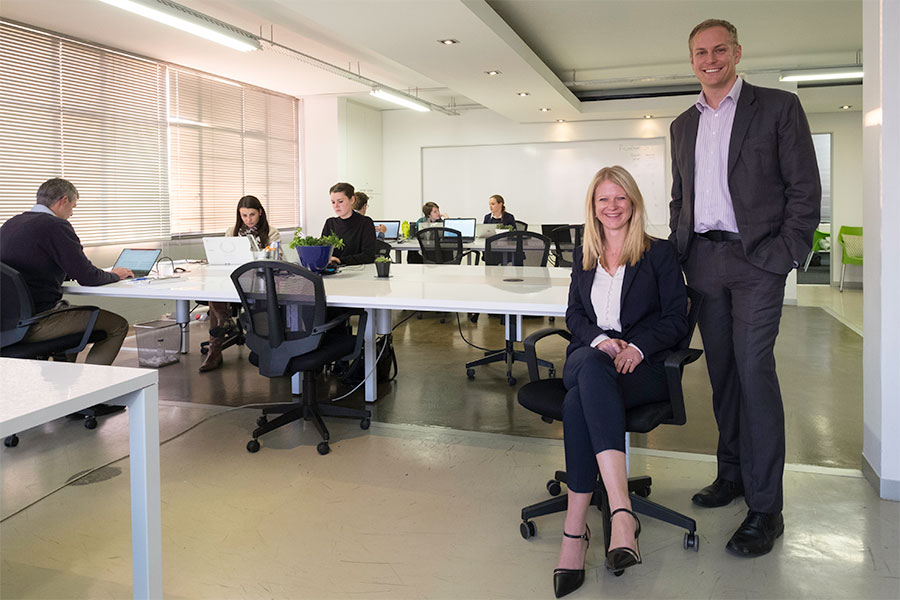
Due to their fresh approach to education, combined with their business acumen, Stacey Brewer and Ryan Harrison, founders of SPARK Schools, have been recognised for their passion to provide a solution to the education challenges in South Africa. The duo have been awarded the Innovator of the Year® award at the 2016 Entrepreneur of the Year® competition sponsored by Sanlam and BUSINESS/PARTNERS awards ceremony, which was held this morning in Johannesburg.

SPARK Schools is a network of primary schools dedicated to delivering accessible, high quality education by using a blended learning programme, which combines traditional classroom teaching and online learning, to individualise education for all students. The SPARK Schools model is the first of its kind for primary school students in Africa and the software SPARK scholars use is adaptive, allowing for highly individualised student practice and assessment.

SPARK Ferndale, the first school in the SPARK Schools network, opened in 2013, and achieved tremendous results in its first year of operation. Following on this success, the number of schools in the network has grown by 700%, with the number of scholars and staff members having grown by 1411% and 1300% respectively. The SPARK Schools networkcurrently includes a SPARK Cresta (opened in 2014); SPARK Maboneng and SPARK Bramley (both opened in 2015); SPARK Midrand, SPARK Lynedoch (Stellenbosch), SPARK Rynfield and SPARK Centurion (all opened in 2016).

According to the competition’s judging panel, it was SPARK Schools’ competitive advantage and solid business model that made the business stand out above the rest. “They don’t only have the curriculum right, but also the correct mix of quality and price, thereby making it accessible to all. This is set to make a huge impact on South Africa,” the judges commented.

School fees are benchmarked on what government’s total cost to educate is and the business ensures that “affordable” means affordable to the country. In terms of cost, SPARK Schools are therefore cheaper than government schools and significantly cheaper than private schools, while in terms of quality, the SPARK Schools’ students are outperforming the national standard by at least one level. This combination of lower price and great quality is what sets SPARK Schools apart from competitors.

Stacey and Ryan are true innovators who have taken the current structure of education in South Africa and challenged it. The duo, who are dedicated to making a difference in the future of South Africa’s children, aims to inspire others by their success. “At SPARK, we aim to inspire fellow South Africans to ensure that they address the issues facing the country and to make sure that South Africa is better because of them.  We hope that by winning such a prestige award such as this, other South Africans will be encouraged to serve and address the needs of our country,” the duo concludes.

Visit www.sparkschools.co.za for more information on SPARK Schools.

15 finalists named for the 2016 Entrepreneur of the Year® competition

Following a fiercely competitive preliminary round of the 2016 Entrepreneur of the Year® competition sponsored by Sanlam and Business/ Partners, a shortlist of 15 standout entrants has made it through to the final round of the competition, with the ultimate winners to be announced in September.

We are thrilled to announce that we received 213 entries this year – one of the highest number of entries recorded to date and a steep increase of 40% when comparing the number of entries received for the 2015 competition. We also saw a jump in the number of female entries and we are delighted at the consistent growth in the number of entries from female entrepreneurs which reached a new high growing to more than 38% of the total participant pool, up from 29% of entries in 2015.

This increase in entries is testament to the thriving level of entrepreneurial talent and success present in the country. We would like to congratulate and commend all entrants, as these are the individuals who bring about positive change and fuel job growth – helping the South African economy and communities to grow.

The finalists, in no specific order, are:

Carl and Peter Pretorius – Just Trees

Carl and Peter Pretorius, based in Noorder Paarl, are the entrepreneurs behind Just Trees – a wholesale tree nursery that supplies specimen container grown trees to the trade throughout South Africa.

Dillon Jearey – Kilowatt Audio Visual Pty Ltd

So much more than your ordinary tech supply company, Kilowatt AV is a high-end audio visual equipment specialist company in Cape Town, founded by finalist Dillon Jearey.

Michael Roberts – Robhur Management T/A Future Talent

The Future Talent training course is an innovative platform created by Michael Roberts from Gauteng, on which critical financial and life-skills are taught and practiced.

Barry Nigel Gould – CAPCO

Established in 1989 by finalist Barry Gould, CAPCO is a stockist and manufacturer of ceiling and partition systems and components.

Cara Nortman – SSQ Exhibitions

Gauteng-based Cara Nortman began SSQ Exhibitions, a design and project management agency that specialises in targeted brand experiences such as exhibition stands, mall displays, sets, roadshows, activations and permanent interiors.

Nerina Smith – Smithland Guest Apartments

Nerina Smith, owner of Smithland, saw a need in Cape Town for self-catering accommodation and took the initiative in 1992. Over the years Smithland Guest Apartments has grown into a successful business with 24 units of which she owns 14, managing the others on behalf of property investors.

Johan Eksteen – Pelleting Machinery T/A Agricon

Based in Bloemfontein, Johan Eksteen’s company, Agricon, specialises in the design and manufacture of pelleting solutions for the agricultural industry. Johan is also a reigning competition title holder having clinched the Small Business Entrepreneur of the Year® title in 2014.

Mishje Cooper – ZooZoo Land Daycare

Mother of two, Mishje Cooper is the founder of educare business, ZooZoo Land Daycare – providing a nurtured environment where children can build a foundation for continued learning.

Gali Gaon Segall – Yemaya Group

Gali Gaon Segall is the entrepreneur behind the successful beauty and wellness services company, Yemaya Group, based in Cape Town.

Meisie Nkosi – Scarper Traders T/A Bella Bonni Guest House

Bella Bonni Guest House – situated in Witbank, Mpumalanga and founded by finalist Meisie Nkosi – is a 100% black woman owned establishment that offers luxury, business-like accommodation in a modern, contemporary design.

Lucas Frederick Van Wyk – Advance Fenestration

Based in Gauteng, Lucas Frederick’s business, Advance Fenestration, specialises in the design and manufacture of architectural aluminium systems for the local and export market.

Stacey Brewer – Spark Schools T/A eAdvance

Stacey Brewer’s company is dedicated to pushing the boundaries of education innovation – from pioneering blended learning to reimagining high expectations, eAdvance is empowering teachers and inspiring families.

Corrie Van Der Wath and Nelisiwe Magubane – Matleng Energy Solutions

Matleng Energy Solutions is a South African black woman owned company led by Nelisiwe Magubane, in association with Corrie van der Wath, that strives to solve clients’ energy related challenges through the effective implementation of new and/or existing technologies.

Chanette Goosen – Rush Extreme Sports

Chanette Gooden is the founder of Rush Extreme Sports, an indoor extreme Trampoline Park situated in Cape Town with 1500-2500 square meters of adventure, excitement, fun and challenges.

Vanessa Jacobs – Sow Delicious

Western Cape-based Vanessa Jacobs is the woman behind the innovative edible gardening store, Sow Delicious, which specialises in heirloom seed and garden gadgets.

The 15 finalists operate in various sectors throughout South Africa, with the majority originating from the Western Cape (47%) and Gauteng (33%), and include a strong representation from the manufacturing and services sectors. Given the manufacturing sector is vital to job-creation, it is always encouraging to see driven entrepreneurs occupying this space, as unemployment in South Africa continues to be a major challenge.

The services sector with entrants operating in the health, beauty, education and training industries was also well represented this year, following by entrants in the hospitality industry.

The next step in the judging process is the selection of the overall 2016 Entrepreneur of the Year® winner, as well as winners for each of the five categories, namely emerging, small business, medium business, job creator and innovator. The judging process is completely independent, and the evaluation process runs through three different filtering stages, which ensures that everything is checked multiple times to remove any human error or preference which may have otherwise crept in.

The 2016 finalists stand the chance to win prizes worth R2 million, which include cash prizes to the value of R425 000. Beyond monetary prices, previous finalists have benefitted greatly from the various networking opportunities and associated media exposure that the competition offers. Past winners have also gone on to win international awards and form valuable partnerships as a result of their success in the competition.

Winners will be announced on 1 September 2016 at the official awards breakfast in Johannesburg.

We eagerly await the final stages of this year’s competition and wish all the finalists the best of luck!

What is driving SA’s drastic decrease in entrepreneurial activity?

Entrepreneurial intentions among South Africans has dropped by almost 30% in 2015 when compared to 2013, and almost halved when compared to 2010, yet the perceived entrepreneurial opportunities has increased over the same period, according to the recently release Global Entrepreneurship Monitor South African Report 2015/16.

According to Kobus Engelbrecht, spokesperson for the Entrepreneur of the Year® competition sponsored by Sanlam and BUSINESS/PARTNERS – SA’s leading entrepreneurial platform, there are many aspects at play when analysing these figures. 

The report shows that the perceptions about entrepreneurship in South Africa has increased since 2009, with 40.9% of South African adults in 2015 perceiving good entrepreneurial opportunities (up from 37.8% and 25.4% in 2013 and 2009 respectively). Perceived entrepreneurial capabilities – those South Africans that believe they have the necessary skills, knowledge and experience to start a business – also increased to 45.4%, up from 42.7% in 2013 and 35.5% in 2009.

“Despite these positive indicators, these figures haven’t translated into higher entrepreneurial intention figures, which sharply declined from 19.6% in 2010 to just 10.9% in 2015. This ultimately means that 1 in 10 South African adults currently have entrepreneurial intentions.”

So what has changed in the past five years, since 2010, for South Africa to reach such entrepreneurial lows? Engelbrecht says the declining economy has played a role. The local economy has slowed its growth from 3.1% in 2010 to 1.3% in 2015, and recent reports suggest the economy will only grow by 0.4% in 2016. The prolonged fear of a ratings downgrade has also a negative impact on the economy.

“The 2010 FIFA World Cup, and the build-up to the event, created many business opportunities for both existing and aspiring entrepreneurs to capitalise on, from tourism to infrastructure development, thus stimulating entrepreneurial activity in the country. The ensuing years have failed to present a similar excitement around entrepreneurship despite public and private initiatives to support entrepreneurs, including black economic empowerment policies and enterprise development programmes,” adds Engelbrecht.

He adds: “While the 2010 FIFA World Cup may have cushioned the country against the 2008 global financial crisis, the effects post the financial crisis continue to cast an economic shadow. Banks and other financiers have seemingly become more cautious in their approval processes thus making access to business finance more difficult for aspiring entrepreneurs. However, the long-term effects created by the restructuring of institutions to stimulate youth entrepreneurial activity – such as the Umsobomvu Youth Fund which had been established to finance young entrepreneurs – cannot be underestimated.”

But Engelbrecht stresses that despite this sluggish growth, entrepreneurship should be promoted as an answer to revive the country’s current flagging economy.

Engelbrecht points to a case study in Brazil – an efficiency-driven economy, like South Africa, which was also measured in the report. “Despite entering a recession in 2015, Brazil implemented a small business tax bill called Simples Nacional which offered select small and micro firms a reduced tax rate, and under this bill, tax collected increased by almost 7% year-on-year in the first half of 2015. During the same period, the number of business registrations in the country also increased by 5% year-on-year. These small and micro businesses also created an additional 116 500 jobs between January and May in 2015, despite the economy shrinking during the same period.”

He continues, “Entrepreneurs and small business are widely recognised and praised for their contribution to the local economy and the country’s job creation, yet we aren’t fully supporting these individuals enough to truly maximise their potential.”

Engelbrecht points to the report again which states that the three main constraints limiting entrepreneurial activity is Government policy (61%), access to finance (44%), and education and training (42%). “South Africa’s established business rate is also lower than the average for efficiency-driven economics, which, at 8%, is more than double South Africa’s rate of 3.4%. The country also has the lowest established business rate of all economies that participated in GEM 2014, and was ranked 53 out of 60 economies.”

In terms of policy, he says that it is encouraging that the South African Government has set aside 30% of its procurement spend for SMEs. He adds that this, coupled with the introduction of a central procurement database and eTender system by the National Treasury, if implemented without any undue influence, should serve to stimulate entrepreneurship as it did in the Republic of South Korea (ROK). In the ROK, the government introduced an award-winning e-procurement portal which made government procurement more transparent and led to an increase in contracts awarded to SMEs from 55% to 75% between 2003 and 2012. This system has also reduced the time it takes to pay suppliers from 14 days to 4 hours which goes a long way in boosting the sustainability of SMEs. 

Engelbrecht says, “The public and private sectors need to pull together to improve our entrepreneurial ecosystem and ensure that the required support such as business advice, mentorship and access to finance is available to all entrepreneurs. We also need to make entrepreneurship part of the South African culture, and find ways of sharing knowledge between South African and immigrant entrepreneurs.

“These changes coupled with improvements in entrepreneurship education at school and a renewed commitment to review and eliminate policies that negatively impact entrepreneurs, will ensure that South Africa’s entrepreneurial activity begins an upward trajectory,” concludes Engelbrecht.

How business owners can drive SA’s youth entrepreneurship levels

The 2015/2016 Global Entrepreneurship Monitor (GEM) report for South Africa shows an upsettingly low entrepreneurial involvement level among 18-to-24-year-olds, when compared to the average figure for Africa in the same age group. This is particularly alarming when considering the majority of South African school-leavers do not enter into tertiary education and therefore enter the work force during this period of their life .

With an unemployment rate that has just reached a 10-year high – at a time when almost half the population is under 25 – this low prevalence of youth entrepreneurial activity represents a gross waste of human resources and will most certainly have a negative impact on the country’s future growth prospects. Furthermore, the social implications of long-term unemployment among the youth is significant and could potentially lead to an increased incidence of crime and political disruption.

While the challenge of unemployment among the South African youth is a complex issue, to which there is no one simple solution, increasing the involvement of young individuals in business could contribute to the development of entrepreneurial skills and allow young people an opportunity to participate in the economy in a meaningful way. Whether or not they decide to pursue entrepreneurship in the long run, the experience will also help in developing non-cognitive skills, such as opportunity recognition, innovation and critical thinking.

Here are three simple ways that business owners can help to drive youth entrepreneurship levels:

1. Create an enterprise culture that encourages entrepreneurial activity

In order to encourage entrepreneurial behaviour amongst the youth, South African business owners need to develop and encourage an enterprise culture that positively promotes entrepreneurship. Whether this is done by way of public addresses and seminars, or simply writing a monthly newsletter or blog, business owners should proactively share their entrepreneurial stories and encourage the cultural traits that foster entrepreneurship. These include the notion of acknowledging failure as an opportunity to learn and encouraging creativity and innovation.

2. Become a mentor

This can be done through a formally implemented internal mentorship programme or a more casual invitation to job-shadow for the day and experience the working environment. Either way, allowing a young person to experience the dignity of working, contributing and developing skills may give them the motivation necessary to start a business in the future. In return, a business owner will benefit from the talents, energy and ideas that young people generally bring to the labour force and may even learn something themselves.

3. Open up access to business facilities

One of the easiest and most beneficial ways that business owners can support young and budding entrepreneurs is by allowing them use of their office’s infrastructure, whether this be a desk to work at, access to electronic equipment after hours or use of a boardroom to present ideas to potential investors. While not requiring any effort or time on the part of the business owner, like a mentorship programme would, this inclusive initiative will still allow young people the opportunity to observe a thriving business environment and may spark an idea or passion to create something similar for themselves.

While entrepreneurship is not the sole solution to South Africa’s problem of youth unemployment, it can contribute in unleashing the economic potential of the country’s youth and improve their economic independence, possibly providing an avenue to new job opportunities and career growth.

Hard work and a passion for excellent customer service leads entrepreneur to success

For most entrepreneurs, the journey of entrepreneurship starts at the very bottom of the proverbial ladder. Yet, a keen eye for gaps in the market, coupled with willingness to learn and master every skill, climbing the ladder one step at a time comes naturally and with ease. This most certainly rang true for Christopher Kapanga, owner of Randburg based We Clean It All and a 2016 Entrepreneur of the Year® competition entrant, who embarked on his entrepreneurial journey at the tender age of 26.

Like many entrepreneurs, Kapanga grew tired of working for someone else’s vision. As he grew up with an entrepreneurial family, Kapanga always had a desire to become known for doing something great.

He describes himself as ‘street smart’ rather than ‘book smart’. “I was never a great student and found university difficult. I felt like a failure for not completing my studies, until one day I realised that life is what you make of it. Through my work experience I discovered that there was more I could offer once I understood what I excelled at, and I soon discovered that it was delivering on excellent customer service,” says Kapanga.

Having started his working career as a floor sales assistant at a large clothing retailer, Kapanga quickly learnt the importance of excellent customer service, and was swiftly promoted to supervisor. Soon after he was head hunted by Builders Warehouse, and in his position as a junior manager, he soon learnt that customer service was non-negotiable. In this role, he also enhanced his communication skills through his liaisons with suppliers, and realised he could in fact run his own business.

With the seed planted, Kapanga opted to enter the service industry and joined a carpet cleaning company as an area manager. It was during his five years with the company that his inspiration for growing a business increased, and which ultimately sparked his entrepreneurial journey.

“My then manager was very strict and had an eye on everything. He always knew who worked hard, who slacked, how much stock was on hand, how much petrol was in each van for example. His drive and determination to make his business succeed was what I admired most about him, and so I aimed to be just like him one day,” says Kapanga.

After starting to clean carpets over the weekends for extra money, Kapanga identified a gap in the market for high quality and reliable carpet cleaning services in households and with homeowners who continued to ask for additional cleaning services. He subsequently started his own carpet cleaning company, We Clean It All.

Kapanga says that he knew that delivering unrivalled customer service would set his business apart from competitors. “We don’t only provide a cleaning service to our clients, but also create a beneficial relationship by providing clients with long term advice and solutions for maintenance of their material goods.”

He pegs the first few months of 2008 (after launching his business) as the most challenging – struggling to attract and retain even two clients during the winter months, and having their pricing structure dictated to them by their biggest source of clients – the real estate agencies, many of whom took advantage of his business’ youth in the market.

Today, Kapanga can look back and smile at the growth his business has achieved over the past eight years. His services have broadened to include window cleaning, floor cleaning, post renovation cleaning and flood damage among other services. His staff complement has also increased significantly, with additional office and operational staff members. There are also new exciting projects on the cards which Kapanga hopes will bring the business to the forefront of delivering on-the-go services that will be easily accessible to future customers.

When asked what advice he would give budding entrepreneurs, Kapanga provides three top tips:

  1. Write all your business ideas down;
  2. Do it now: Don’t wait for the perfect time as it will never come. The know how to run the business only starts when you are in it;
  3. Hard work will make your business a success.

He also stresses that education is important. “While I may have struggled with formal education, I make sure to constantly surround myself with business-minded individuals by attending workshops, online education courses, networking events and business management seminars.

“I firmly believe that lessons are not only learned in the classroom. To succeed, you need to always be in the know, and this is why I strive to read as many books on entrepreneurial subjects and stay in touch with business owners and motivational speakers,” Kapanga concludes.

SA businesses encouraged to create incubators to develop tomorrow’s entrepreneurs

“If all business owners in South Africa commit to mentoring one young entrepreneur, we have the potential to double entrepreneurship in two to three years.”

This suggestion was made by a local entrepreneur at the inaugural 2015 Sanlam / Business Partners Entrepreneur of the Year® Alumni Association, an entrepreneurial platform established in an effort to stimulate conversation and action amongst established local entrepreneurs.

During the session the entrepreneurial community – consisting of over 50 past competition title holders and seasoned South African business owners from across various sectors – recognised the urgent need for business incubation in South Africa, and raised valid points about how seasoned business owners can play a vital role facilitating and building entrepreneurship in the country.

Now in its 27th year, the Sanlam / Business Partners Entrepreneur of the Year® competition holds a database of top entrepreneurs and through the alumni, we seek to harness entrepreneurs’ expertise to remove the barriers they see as hindering entrepreneurship within the country.

Entrepreneurs in attendance agreed that small and medium enterprise (SMEs) owners underestimate the value and the difference they can make by guiding and supporting potential entrepreneurs who need support in starting or growing their business.

Now more than ever the market needs more employers

The recently released GEM Africa’s Young Entrepreneurs report states that by 2040 Africa’s young workforce will be the largest in the world, surpassing both China and India. In South Africa, this potential workforce is largely unemployed with the figure already reading 53% when compared to the adult population figure of 21%.

In South Africa, the formal sector is increasingly feeling the pressure and is unable to serve the current employment demands. This pressure is only set to grow if additional measures to drive youth entrepreneurship are not implemented in the country.

To curb this, youth need to be encouraged to pursue entrepreneurship as a viable career option. More importantly, young entrepreneurs embarking on the journey need to be supported in order to succeed so that they too can develop into successful entrepreneurs who will go on to create additional job opportunities.

South Africa’s youth are being taught to be job seekers, rather than job creators.

Past GEM research shows that only 11% of South Africa’s youth indicate that they intend to start a business in the next 3 years.

As a country, we need to encourage entrepreneurship from a young age. Education institutes can only inspire youth to a certain degree. Families need to groom their kids to become entrepreneurs and young, budding entrepreneurs need to have access to business owners they admire and spend time with them in a working environment where they can experience an entrepreneur’s passion for business first hand.

Leading by example

A Western Cape based alumni member operating in the construction space recently implemented an internal mentorship programme and incubator space within his business as he believes that ‘giving someone an opportunity can lead to great things’. The programme provides a platform for start-ups to make use of his office’s infrastructure, whether it is a desk, access to the printer or use of the boardroom. The entrepreneur also mentors young entrepreneurs by providing advice when needed, as well as introducing them to the business world by allowing them access to business engagements or seminars.

While there are barriers to entry for young entrepreneurs, if the small business community can inspire more youth to consider entrepreneurship, one battle will be won.

In South Africa, there aren’t enough grassroots organisations that equip young entrepreneurs with technical knowledge. A retired entrepreneur in attendance said that having recently mentored her son who owns a business, made her realise how desperately the youth seek guidance. She explained that while they have the passion and ideas, they struggle to implement these ideas and that more should be done to make it easier for them to grow their business.

The youth therefore need to have the opportunity to shadow a seasoned entrepreneur and be shown what it takes to run a business and what can be achieved with commitment and dedication.

Give back and get back

Not only are these mentorship and incubator initiatives relatively easy to implement, but entrepreneurs can also reap rewards from these engagements. Entrepreneurship can be a lonely job and an incubator environment can create an immediate sounding board for your business. It creates an opportunity for you to also learn and possibly think of new ways to do business.

Gugu Mjadu, spokesperson for the Sanlam / Business Partners Entrepreneur of the Year® competition and co-facilitator of the alumni events which were hosted across the country in 2015.

SA entrepreneur recognised for cutting edge approach to job creation in hairstyling industry

Lewis Thomas, owner and founder of Partners Hair Design, has been named the 2015 Sanlam / Business Partners Entrepreneur of the Year’s Job Creator of the Year® at an awards ceremony held in Johannesburg this morning. Thomas was recognised due to the significant work he does in educating and empowering individuals within South Africa’s growing hairstyling community.

After establishing Partners Hair Design 31 years ago, Thomas established the Partners Hair Design Training Academy (PHDTA) with the aim to educate, empower and equip aspiring local hairstylists with the necessary tools to succeed in a very competitive industry. The academy is SETA accredited and provides solutions, aligned with the latest in global hair styling trends, to both the general public, as well as Partners Hair Design staff.

The training academy offers a full-time course over a 12-month period to learners, thereby enabling them to complete all three academic levels required for a full ladies hairdressing qualification in one year, and empowering them to enter the local job market far sooner than after the standard three year course.

Lewis has a very hands on approach and plays an integral role within the academy, as he believes that it plays a critical role in growing the business, as well as the hairstyling and beauty sector, as all students are instilled with global standard skills, professional values and work ethic. He explains that the training includes a fully-functional salon that accurately simulates a day’s work in a salon, empowering graduates with real-life skills and experience. “In the simulation they work with real-life hairstyling products from the larger beauty houses, and are trained in the use of the in-salon software that is commonly used by large players in the hairdressing industry.”

In addition to the role that Thomas plays in education, Partners Hair Design employs approximately 250 individuals nationally, who are exposed to continual on-the-job training and education, which extends to advice on savings and financial wellness, dress and even diet. He says that professional, intensive and personalised training and education is the most important factor which differentiates Partners Hair Design not only from other businesses in the industry, but often from businesses in general.

“Our staff are our most important asset, not only as they are the essence of our business, but because we care for them as individuals,” explains Thomas.

Feroze Oaten, a member of the Sanlam / Business Partners Entrepreneur of the Year® judging pane, says that Partners Hair Design epitomises what the Job Creator of the Year® award stands for. “Thomas and his team not only employ a significant number of employees throughout South Africa, addressing unemployment rates of the communities which the businesses serve, but also play a key role in continually uplifting and training their employees with world-class skills.”

Thomas believes that entrepreneurs should be celebrated and recognised due to the important role they play in society. “As with most global or multinational businesses which employ thousands of people it starts with just one person with an idea – the entrepreneur. This person focuses on the idea, overcomes the obstacles and ultimately reaps the rewards on his or her journey.”
For more information about Partners Hair Design visit www.partnershair.co.za

KZN nephrology centre awarded top entrepreneurial Judges Prize

Ncamisile Maphumulo, owner of Coastal Nephrology Centre, a kidney dialysis treatment centre in deep-rural KwaZulu-Natal, has been awarded the Judges Prize at the annual Sanlam /Business Partners Entrepreneur of the Year® award ceremony, held in Johannesburg this morning.

The Sanlam / Business Partners Entrepreneur of the Year® Judges Prize, an additional award introduced to the competition last year, was awarded to Maphumulo due to the social impact that her business is making in the community.

The centre was started by Maphumulo when the health company she was working for in the area closed down their dialysis centre, leaving sick patients stranded. Maphumulo decided to start her own business to help the patients who needed to travel hours to receive the necessary treatment, and now provides much needed healthcare solutions in deep rural areas where treatment is not easily accessible.

Feroze Oaten, a member of the 2015 Sanlam / Business Partners Entrepreneur of the Year® judging panel, says that the decision was taken by the judges to award Maphumulo the prize due to the vast difference she is making, as well the entrepreneurial drive that she possess. “She recognised the desperate need in the community and used her competence to render a much needed service.”

Coastal Nephrology Centre offers kidney dialysis treatment services to the population of Ulundi within the Zululand District, a rapidly developing municipality that services a thriving rural community. The business has subsequently branched out, and started a renal unit in Nongoma which began offering treatment in August 2014, Mahlabathini, Melmoth and surrounds.

The centre also offers an education programme which involves a management programme for patients with end stage kidney disease, family history of kidney disease, compromised kidney function, hypertension and diabetes.

Maphumulo says that being recognised by the Sanlam / Business Partners Entrepreneur of the Year® competition means the world to her as it shows that the judges believe in her business and the hard work she has put into it thus far. “Entrepreneurship is all about risk taking and building something from nothing. Entrepreneurs should be celebrated and recognised as they all play a vital role in growing the South African economy and creating jobs.”

For more information please visit www.coastalnephrologycentre.co.za

Artisan skills training centre collects Medium Business Entrepreneur of the Year® award

Marthie-Jansen-van-Rensburg---Ekurhuleni-Artisans-&-Skills-Training-Centre---53

Marthie Jansen van Rensburg, founder of Gauteng-based Ekurhuleni Artisans and Skills Training Centre, walked away with the Medium Business Entrepreneur of the Year Award ® at the annual Sanlam / Business Partners Entrepreneur of the Year® Competition, held in Johannesburg on Wednesday, 3 September 2014.

Ekurhuleni Artisans and Skills Training Centre was established in 2006 following the identification of a need for an alternative way to the traditional schooling system. Students who did not have the academic ability to finish secondary schooling are given the opportunity to equip themselves with more practical artisanal skills, thus enabling them to become artisans or potential entrepreneurs.

Jansen van Rensburg says that there is currently a great shortage of well-trained artisans in South Africa and it is vital that similar places of learning become attractive to young South Africans in order to close the gap. “Too often, young students who do not have the academic ability fall by the wayside and do not consider the prospects an artisanal career may present. In light of this, our purpose is to rebrand these once underestimated career options as an attractive choice for young South Africans.”

According to Lionel Billings, a member of the Sanlam / Business Partners Entrepreneur of the Year® judging panel, whilst not a trained artisan, Marthie was able to identify a unique gap in the education sector to train and up skill young South Africans to become qualified artisans. “Having started the centre without any outside funding, Marthie, through her passion and drive, has been able to make a direct and real impact in an environment, especially the youth, where unemployment is a growing concern.

Billings adds that what makes Ekurhuleni Artisans and Skills Training Centre stand out, apart from the approach Marthie follows, is that artisans that graduate from the centre are employable. “The centre provides real and practical skills which also enable graduates to gain further training and accreditation.”

With a key objective to increase the number of skilled artisans added to the South African labour market, Ekurhuleni Artisans and Training Centre offers a number of courses spanning across different industrial trades from boilermaking and bricklaying to professional painting and carpentry. In addition, the training centre provides individuals with the necessary assistance in preparing for their trade test. Existing tradesmen who would like to sharpen their skills can do so with the refresher courses on offer.

Since opening its doors, Ekurhuleni Artisans and Skills Training Centre has successfully upskilled over 19,000 students and plans to double this number by 2020.

“We are very proud to receive this accolade for the work we have done thus far, but it definitely doesn’t stop here. While we take the time to relish in this milestone, we will continue to achieve excellence and add value to South Africa’s social development.” concludes Janse van Rensburg

For more information on Ekurhuleni Artisans and Skills Training Centre, please visit www.eastc.co.za.

15 finalists selected to advance in SA’s premier entrepreneurial competition

After carefully sifting through a record amount of entries, the 2014 Sanlam / Business Partners Entrepreneur of the Year® judging panel have identified the 15 finalists who have been selected to advance to the final round of the competition.

According to Christo Botes, spokesperson for the 2014 Sanlam / Business Partners Entrepreneur of the Year® competition, the amount of entries received this year is a dramatic increase in comparison to the 2013 and 2012 competition. “We are pleased to announce that we received 214 entries in 2014, which is the highest volume recorded to date and an increase of 21% compared to last year. The entries have once again impressed the judging panel and have highlighted the quality of entrepreneurial talent and success present in the country.”

Botes says that he believes that the quality and quantity of this year’s entries is a direct result of previous winners’ success, as well as the status which the competition has established for itself within the entrepreneurial community. “The quality of the 2014 entries confirmed that the future of the entrepreneurial community in South Africa is very promising.”

He says that the 15 finalists operate in various sectors, the most prominent being the services and manufacturing sectors, with the majority originating from Gauteng and the Western Cape.

“The profile of the entries gave us even more inspiration to further celebrate entrepreneurial success. The types of businesses and the niches they fill in their respective sectors and markets shows that there are still many opportunities in our economy. What is needed from local entrepreneurs is the open-mindedness and guts to identify and grab the opportunities that are just waiting to be harvested.

“We commend all entrants and encourage individuals who have not been selected for the next round to try again next year. It is encouraging that South African entrepreneurs are not afraid to stand up and take pride in the businesses that they have created. It is vital for the country to recognise these individuals as they play a vital role in the economy by creating jobs and economic growth. Even though entrepreneurs have not been officially recognised yet – they all deserve to be celebrated.”

This year’s entries represent a wide array of sectors in South Africa, including the engineering, IT, services, retail, hospitality and education industries. Botes says that the demographics of this years’ entries are exciting to say the least. “Close on 30% of the entrants were located outside the four large metropolitan areas, which indicates that our rural economy continues to have thriving businesses, and that SMEs remain the backbone of those areas. Gauteng (43.9%) and Western Cape (22.4%) make up two thirds of all the entries, which throws out a challenge to the other provinces to be more bold in entering the competition as these two provinces seems to be more confident in celebrating their success.

“We also are delighted at the growth in the number of black entries as for the first time it grew to more than half the entries at 54.7%. Female entries also reached a new high at 31.78% and if one further considers that many of the male entrants also have, at the core of their businesses, a spouse that is just as committed to the business as the male entrant.”

Botes explains that the next step in the judging process is the selection of the winners in the different categories. “The judging process is completely independent and is monitored by PwC. The judges also represent different areas of the business community and include successful seasoned entrepreneurs, as well as a representative from each of the sponsors and a director from PwC. The evaluation process runs through three different filtering processes, which ensure that everything is checked and rechecked to remove any human error or human preference which otherwise could have crept into the process.”

He says that the 2014 finalists stand the chance to win prizes worth R1 340 000, which includes cash prizes to the value of R350 000. “Beyond the chance to win prizes, previous entrants and finalists have benefitted from the competition’s various networking opportunities and associated marketing efforts. Certain winners have also gone on to win other prominent awards and form valuable partnerships as a result of their success in the competition.

“We are eager to move onto the next round of the competition and wish all the finalists continued success and good fortune,” concludes Botes.

The 2014 Sanlam / Business Partners Entrepreneur of the Year® winners will be announced on 3 September 2014 at the official awards breakfast in Johannesburg.

2014 Sanlam / Business Partners Entrepreneur of the Year® finalists:

Wendy Kemp (Accountability Group), Dudu & Leema Mofokeng (Legaći Superior Dry Cleaning & Laundry Services), Marthie Jansen van Rensburg (Ekurhuleni Artisans & Skills Training Centre), Dr Michelle Booysen & MJ Fick (Pétanque Consultancy), Karabo Songo & Olatoye Amosun (Olive Communications), David Green (Thegreencompany Importers (Pty) Ltd), Lorimer Gowar (Larrem (Pty) Ltd), Johan Eksteen (Agricon), Adri & Faan Kruger (Tzaneen Country Lodge), Hans van Aardt (Microworks (Pty) Ltd), Theri Rossouw (Therific Naturals), Hassan Suleman (Form Force (Pty) Ltd), Johan Kilian & Lukas Loots (Pie City), Daniel Guasco & Wayne Gosling (Groupon South Africa), Theresa Cupido (ATN Roadmarking & Civils).